Author: Admin-XFE9L

  • Arne Slot Has a Premier League Title. That Might Be the Problem.

    Arne Slot Has a Premier League Title. That Might Be the Problem.

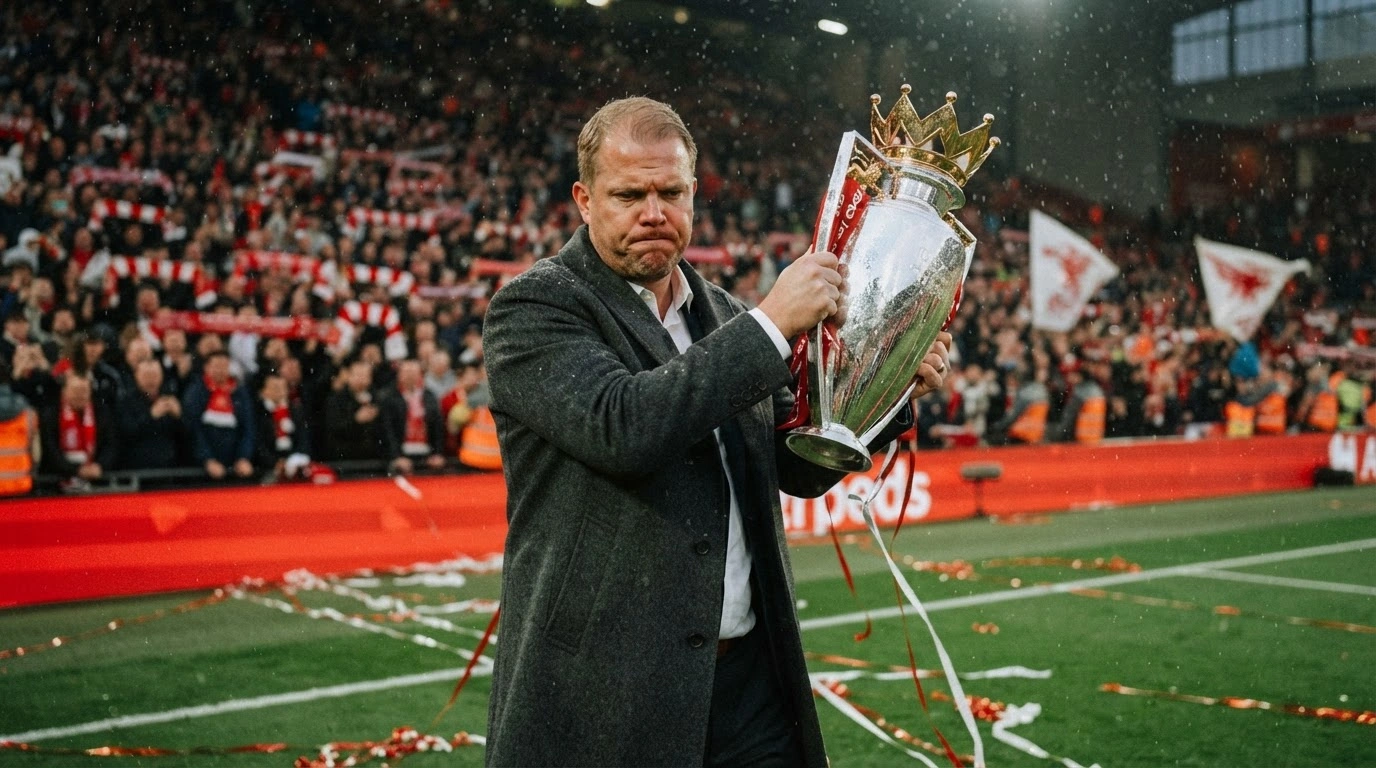
    One Premier League title each. Arne Slot has one. Jurgen Klopp has one. Slot took two seasons to get his. Klopp needed nine.

    That sentence is true, rude, and incomplete all at once. It is the kind of barstool stat you drop to watch someone’s face cycle through four different emotions before they decide which hill to die on. Let’s climb it together.

    The Dream Start

    Slot’s first season was a sugar high. He walked into the hardest job in football — replacing a deity — and won the Premier League with four games to spare. Twenty-six matches unbeaten. First Dutch manager to do it. Seventh manager in history to win the league in his debut season. Mohamed Salah scored 29 goals. The football was controlled, professional, and ruthlessly efficient. It was not heavy metal. It was a spreadsheet that kept winning.

    The narrative wrote itself. “Maybe the system was the genius all along.” “Maybe Klopp built a machine that could drive itself.” “Maybe Slot is actually brilliant.” All three floated around Anfield last summer, and all three contained some version of the truth.

    Context for the Catalog

    Klopp’s one league title in nine seasons sounds thin on paper. The full context is a lot uglier.

    Four times Klopp’s Liverpool went toe-to-toe with Manchester City and came out second by the slimmest margins in Premier League history. Ninety-seven points in 2018-19. Ninety-two points in 2021-22. Two titles lost by a single point each. Meanwhile, City are staring down 115 charges for financial doping.

    That is not a whataboutism. That is the defining asterisk of an entire era. Klopp didn’t lose to a better team. He lost to a balance sheet. His one league title should probably be four, and everyone who watched it unfold knows it.

    Slot inherited a club built by that fight. Jürgen Klopp did not inherit a Premier League-ready machine. He built one from the studs up, and the only reason his trophy cabinet doesn’t show four league titles is that the sport’s financial regulations were apparently optional for one competitor.

    The Rot

    Then came year two.

    The 2025-26 season began in tragedy. Diogo Jota’s death in a car crash in July cast a shadow that never fully lifted. The club and the city grieved publicly. Slot had to manage through something no manual covers.

    Liverpool started well — five wins on the bounce, top of the table — and then the floor gave way. Six defeats in seven league matches. A tumble to 12th in November. The champions looked unrecognizable. The same issues kept recurring: slow starts, defensive lapses, an inability to change the shape of a game that was slipping away. Slot tried patience. He tried continuity. He did not try something different, because it appears he does not have much of a Plan B.

    They recovered to finish 5th and scrape Champions League qualification. Respectable, on paper. The underlying story is less kind. The flaws did not get fixed. They got papered over by a soft run of fixtures and a few individual moments of quality.

    Keeping Him Is a Bet

    Arne Slot is entering the final year of his contract. The club decided to hold. That is either patient or timid, and the next six months will tell us which.

    If you believe the 2024-25 title was evidence of a long-term manager, the decision makes sense. If you believe the 2025-26 collapse revealed something fundamental — a manager who can steer a well-oiled machine but cannot redesign it mid-journey — then keeping a lame-duck head coach into a contract year is a recipe for drift.

    I would have moved on in January. Not out of animus — I do not know the man and he seems perfectly likeable — but because the job description is “fix the problems,” and the problems stared back at him for five months without getting solved. A long run of the same issues is not bad luck. It is data, and data eventually demands a decision.

    The Decent Guy Problem

    Here is the tension at the heart of Slot’s tenure: he is a decent guy. Competent, calm, well-prepared. The players seem to like him. The press conferences are pleasant. There is no drama, no tantrums, no exploding at the fourth official every weekend.

    In the Premier League, “decent guy” is sometimes enough. Ask David Moyes — decent got him into the door at Old Trafford, and decent got him sacked within a season. In Slot’s case, it was enough to win a title with someone else’s squad playing someone else’s patterns. The question is whether it is enough to build something of his own, with his signings, playing his way.

    When the wheels came off in the autumn of 2025, there was no visible pivot. No tactical shift, no formation change, no public spark. Just the same shape, the same approach, the same post-match analysis about fine margins. Decent guys do not always have a mean streak, and elite sport tends to demand one eventually.

    What Happens Next

    My read — and this is speculation, not prophecy — is that Slot is sacked by Christmas. The contract situation will hover. The results will wobble. The crowd will grow restless. And at some point, the club will decide that drifting toward a mid-table finish with a manager who cannot sign an extension is worse than making an uncomfortable decision early.

    The natural caretaker is already in the building. Virgil van Dijk as player-manager writes itself. He is the captain, the figurehead, the best defender on the pitch, and the most respected voice in the dressing room. If the club needs someone to steady the ship for six months while they find the next long-term appointment, you could do a lot worse than handing the armband a notebook and a set of cones.

    Close

    One league title each. Slot has number 20. Klopp has number 19. The same number. The same trophy.

    They are not the same achievement. Slot’s title was a masterclass in stewardship — taking a finely tuned machine and keeping it running at peak performance. Klopp’s title was a masterclass in construction — building that machine from scrap while a state-adjacent rival cheated the system beside him.

    Decent is not a dirty word. Slot is a decent manager with a Premier League medal to prove it. But decent does not always mean right, and the 2025-26 season suggested that being liked and being effective are not the same thing. Sometimes the decent guy gets the job done. Sometimes he just gets a longer runway before everyone realizes the plane cannot change course.

  • Eat Your Own Dog Food

    Eat Your Own Dog Food

    In the tech world, we have a saying: “Eat your own dog food.”

    It is a simple rule. If we are going to ask you to pay for a service or a piece of hardware, we should be using it to run our own business first.

    At OConnell I.T., we take this seriously. We do not chase trends and we do not sell hype. Before we suggest a change to your business, we become the crash test dummies.

    Take the mini-PCs many of our clients use now. Before we recommended them to a single family business on Long Island, we bought them for ourselves. We tore them down. We ran them as our daily workstations for six months to see if they would overheat or lag. We wanted to find the breaking point on our clock, not yours.

    The same goes for our infrastructure. We host our own website. We use our own servers. We rely on the same backup systems we install for you. If those systems fail at 7 AM, it is our problem before it is ever yours.

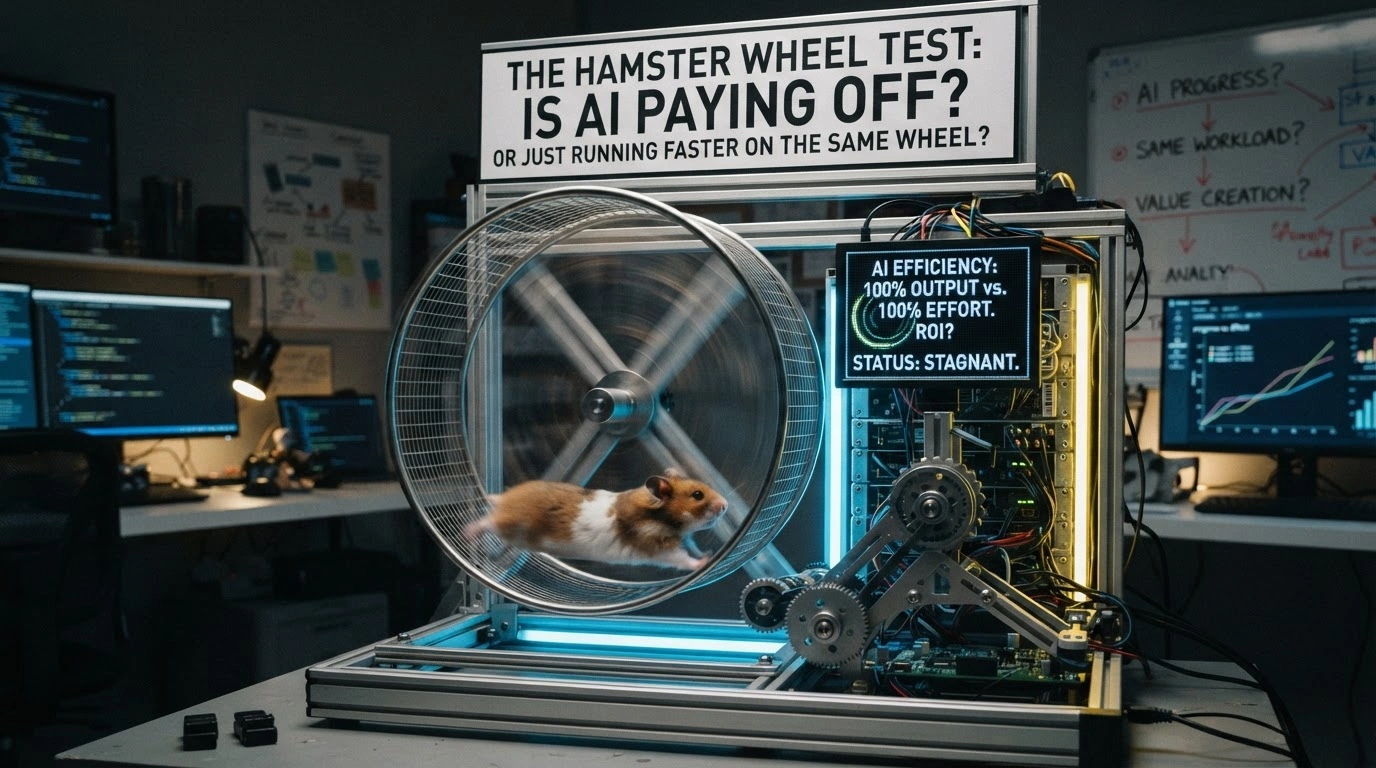
    Lately, everyone is talking about AI. Most of it is just noise. We have been running daily exercises with AI tools for months to find the actual value for a small business. We are not looking for “revolutionary” shifts. We are looking for faster response times, cleaner communication, and quicker estimates for your customers.

    We recently helped a client automate their content scheduling. They told us:

    “Our customers see our social media accounts are alive again.”

    That is a real business outcome. It is not a buzzword. It is a tool that works.

    Think of it like your CPA. You trust them because they use the same rigorous standards for their firm that they use for your books. They wouldn’t touch a software they didn’t trust, and neither will we.

    We do the testing. We deal with the implementation headaches. We learn what works and what is just a waste of your time.

    By the time we offer a service to you, it is not an experiment. It is a proven tool that we already trust to keep our own doors open.

    If you want technology that is tested and a partner who actually shows up, let’s talk.

    OConnell I.T.
    Plain-speaking. Proven. Local.

  • The ‘Hollywood’ Problem — When a Client Says No for the Right Reason

    The ‘Hollywood’ Problem — When a Client Says No for the Right Reason

    One of the more useful moments in client work is not when you present a strong idea.

    It’s when a client turns one down for the right reason.

    I was in a branding session last week. We covered the usual areas:

    • Content strategy
    • Visual direction
    • Marketing channels
    • ROI

    The conversation moved to AI-generated video.

    They said no immediately.

    This wasn’t pushback for the sake of it.

    It came from experience.

    They had tried radio advertising before. It didn’t land.

    • Customers felt a disconnect
    • The messaging came across as too polished
    • The brand didn’t feel like itself

    They summed it up in one line:

    “It felt like we’d gone Hollywood.”

    That explained the reaction.

    From their point of view, an AI spokesperson creates the same problem.

    • It changes the tone
    • It creates distance
    • It risks trust

    For a small, family-run business, that matters more than production quality.

    There’s a broader point here.

    Most conversations about AI focus on what it can do.

    Very few focus on whether it fits.

    • A tool can be effective
    • It can also be wrong for the brand
    • Perception usually wins

    Good business owners understand this, even if they don’t spell it out.

    They know where the line is.

    Where improvement starts to feel like something else.

    The takeaway is simple.

    Businesses are often the best custodians of their own brand.

    They understand what their customers trust.

    And they know what would break it.